The Quick Answer
A first-time splicer needs five things:
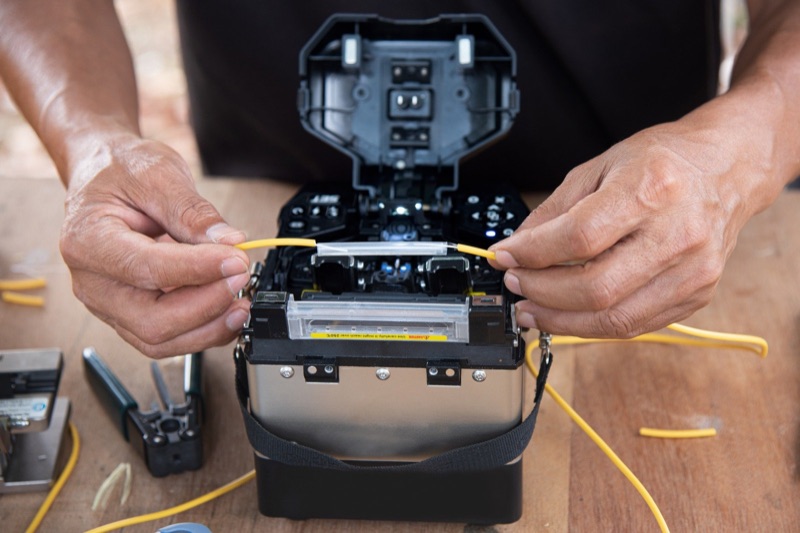
- A fusion splicer: QBL's Palm Fusion Splicer or Fusion Splicer.
- A cleaver: the one your splicer maker recommends. We carry QBL's Mechanical Cleaver 900um, but we do not have a QBL spec confirming it for fusion splicing.
- Strippers and scissors: the Platinum Tools 5-in-1 Fiber Optic Stripper, the Platinum Tools Slit & Ring Fiber Optic Cable Stripper and Platinum Tools Fiber Optic Kevlar Scissors.
- Cleaning: a connector cleaner such as the QBL CLEP 2.5 mm, plus alcohol and lint-free wipes for bare fiber.
- A place to work: QBL's Cabling Splicing Table.
QBL also lists a Fiber Splicing Kit. We do not have its packing list yet, so we are not listing its contents here.
Comparison
| Step | What we carry | Who it is for | What it does | Price |
|---|---|---|---|---|
| Splice | QBL Palm Fusion Splicer | First-time splicers doing FTTH drops and building work | Fusion splicer, palm size | $2,349.99 |
| Splice | QBL Fusion Splicer | Same jobs as the palm splicer | Fusion splicer | $2,349.99 |
| Cleave | QBL Mechanical Cleaver 900um | Not confirmed for fusion splicing; ask your splicer maker | Listed by QBL as a 900 micron mechanical cleaver | $299.99 |
| Strip | Platinum Tools 5-in-1 Fiber Optic Stripper | Anyone stripping fiber | Strips buffer and coating | $25.33 |
| Strip | Platinum Tools Slit & Ring Cable Stripper | Anyone opening fiber cable jacket | Opens the cable jacket | $17.41 |
| Cut | Platinum Tools Kevlar Scissors | Anyone cutting aramid yarn | Cuts aramid (Kevlar) yarn | $21.38 |
| Clean | QBL CLEP 2.5 mm Mini | Anyone cleaning connectors with 2.5 mm ferrules | 2.5 mm ferrules, 800+ cleans per QBL (a 1.25 mm version is also sold) | $37.99 |
| Work | QBL Cabling Splicing Table | Techs who splice in a truck, a building or a vault | QBL splicing table; also sold with accessories | $289.99 |
| Kit | QBL Fiber Splicing Kit | Techs who would rather buy one kit | Packing list not yet available | $399.99 |
1. The Fusion Splicer
Best for. First-time splicers doing FTTH drops, building risers and small backbone jobs.
We carry two fusion splicers from QBL besides the ribbon unit: the Palm Fusion Splicer and the Fusion Splicer. We do not have QBL spec sheets for them yet, so we are not comparing the two here, and we are not quoting alignment method, splice time or other features. Before you buy any splicer, ours included, ask for the spec sheet and check the alignment method, the typical splice loss, and what the warranty and calibration support cover.
QBL also sells a replacement battery, listed as a fusion splicer battery. Confirm it fits your splicer before you order it. For splicing onto connectors, QBL sells SC/APC hot fusion connectors in packs of 10; confirm your splicer supports splice-on connectors before you order them.
We also carry a ribbon fusion splicer, but ribbon splicing is a different job from single-fiber splicing and not where most first-time splicers start. Our guide to ribbon vs single-fiber splicing explains the difference.
2. The Cleaver
Best for. Everyone who fusion splices. A fusion splice is only as good as the cleave: the fiber end has to be flat and square, or the splice loss goes up or the splicer rejects it.
We carry QBL's Mechanical Cleaver 900um, listed by QBL as a 900 micron mechanical cleaver. We do not have a QBL spec confirming it for fusion splicing, so check what your splicer maker recommends before you buy a cleaver. Our fiber cleavers and strippers guide covers cleavers in more detail.
3. Strippers and Scissors
Best for. Everyone who prepares fiber. Before a fiber can be cleaved, you open the cable jacket, cut back the aramid yarn, and strip the buffer and coating down to bare glass.
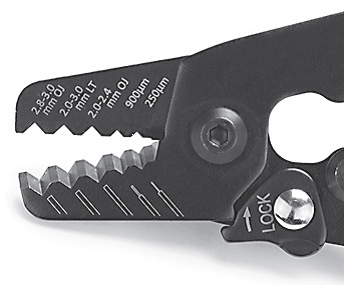
Platinum Tools makes a hand tool for each step: the Slit & Ring Fiber Optic Cable Stripper for the jacket, the Fiber Optic Kevlar Scissors for the aramid yarn, and the 5-in-1 Fiber Optic Stripper for the fiber itself. Check the sizes each tool is made for against your cable before you buy. Do not use copper wire strippers on fiber; they nick the glass.
4. Cleaning
Best for. Everyone. Bare fiber is wiped with alcohol and a lint-free wipe after stripping and before cleaving, and any connector you mate needs a clean end face. Dirt on the fiber is a common cause of high splice loss.
For connectors, match the cleaner to the ferrule: the QBL CLEP comes in 1.25 mm and 2.5 mm, and Platinum Tools makes pen cleaners in 1.25 mm and 2.5 mm. QBL also lists a Fiber Cleaning Kit; we do not have its packing list yet. We do not sell alcohol or lint-free wipes on their own. Our guide to cleaning fiber connectors covers the routine.
5. A Place to Work
Best for. Techs who splice anywhere other than a clean bench: a truck, a basement, a vault.
A splicer needs a steady, level surface out of the wind and dust. QBL's Cabling Splicing Table is sold on its own or with accessories, and QBL also sells Flex-Arm accessories for it. Our guide to setting up a fiber splicing table covers the layout.
Splice Sleeves, Trays and Closures
You will also need splice protection sleeves for every fusion splice, and splice trays or a closure to hold the finished splices. We do not sell splice sleeves on their own. For small outdoor jobs, the Platinum Tools IP68 Weatherproof Splice Enclosure includes a removable fiber splice tray, a Cat6 coupler and mounting hardware, and Platinum Tools rates it IP68.
Splicer brands you will see that we do not sell include Fujikura, Sumitomo and INNO Instrument. Our fusion splicer buying guide and best fusion splicers for FTTH cover the wider market.
What a Lower-Cost Splicer Gives Up
Splicer prices vary widely. The money usually goes to the alignment method (core alignment or cladding alignment), how consistent the splice loss is, how well the unit holds up in the field, and the support and calibration behind it. Ask about each one before you buy. Our guide to low-cost vs premium fusion splicers goes through each, and core vs cladding alignment explains the biggest one.
How to Choose Your First Setup
- Your work. FTTH drops and building work call for a single-fiber splicer. Ribbon cable calls for a ribbon splicer.
- The spec sheet. Ask for it before you buy any splicer, and check alignment method, typical splice loss, warranty and calibration support.
- The cleaver. Budget for a good one. A poor cleave means a poor splice, whatever the splicer.
- The prep tools. Strippers, scissors and cleaning supplies sized for your cable.
FAQ
Which fusion splicer should a beginner buy?
Start with a single-fiber splicer, not a ribbon splicer, unless your work is ribbon cable. We carry two fusion splicers from QBL besides the ribbon unit: the Palm Fusion Splicer and the Fusion Splicer. Ask for the spec sheet of any splicer before you buy and check alignment method, typical splice loss, warranty and calibration support.
What else do I need besides the fusion splicer?
A cleaver, strippers and Kevlar scissors, cleaning supplies, a steady place to work, and splice protection sleeves. The cleave and the cleaning decide whether the splice is good before the splicer fires.
Do I need a separate cleaver?
Every fusion splice needs a cleaved fiber, so you need a cleaver. If your splicer or kit does not include one, buy it separately.
Is a low-cost fusion splicer good enough?
It can be for drops and building work, if the splice loss it delivers meets your job spec. The differences between low-cost and premium splicers are usually the alignment method, splice loss consistency, durability and support. Ask about each one before you buy.
Should I use fusion splicing or mechanical splicing?
Fusion splicing gives lower loss and is the usual choice for permanent splices. Mechanical splicing needs less equipment and suits quick repairs and small jobs. Our mechanical splice vs fusion splice guide compares them.
Shop Fusion Splicers
See every splicer, battery and splice-on connector we carry in fusion splicers.
Related reading: