TL;DR — Key Takeaways
- Palm splicer ($2,349.99): max portability for single-fiber FTTH drops, aerial closures, and emergency repairs.
- Full-size splicer ($2,349.99): the do-everything workhorse — adds a built-in heater and broader fiber support for backbone and all-day splicing.
- Ribbon splicer ($8,799.99): mass-splices up to 12 fibers per cycle for data center and high-count ribbon cable.
- Before you buy any of the three, ask for the spec sheet and check the alignment method and typical splice loss. We do not quote either for these units until QBL sends its datasheets.
The Quick Answer
Why Fusion Splicing Is the Standard for FTTH
Fusion splicing permanently joins two optical fibers by melting their glass end-faces together with an electric arc. The result is a continuous glass path with minimal reflection and the lowest possible insertion loss. Typical fusion splice loss is 0.02-0.05 dB on single-mode fiber -- significantly better than the 0.1-0.5 dB achieved by mechanical splices or the 0.2-0.5 dB of pre-polished mechanical connectors.
For FTTH installations where every tenth of a dB matters in the link budget, fusion splicing is the standard. The splice is permanent, unaffected by temperature cycling, immune to vibration, and requires no maintenance. The only trade-off is the upfront cost of the splicer and the training required to operate it properly.
Three Types of Fusion Splicers
Palm Splicers
Palm splicers are the smallest fusion splicers available. They are designed for one job: fast, portable, single-fiber splicing in the field. The compact form factor means they fit in a tool belt or small case, making them ideal for FTTH service activations, drop cable splicing, and emergency repairs where you need to get in, splice, and move on.
The QBL Palm Fusion Splicer ($2,349.99) is QBL's palm-size fusion splicer. We do not have QBL's spec sheet for it yet, so we are not quoting its alignment method, splice loss or features here.
Best for: FTTH drop installations, service activations, aerial splice closures, emergency repairs. Techs who climb poles and work in tight splice closures will appreciate the size.
Full-Size Single-Fiber Splicers
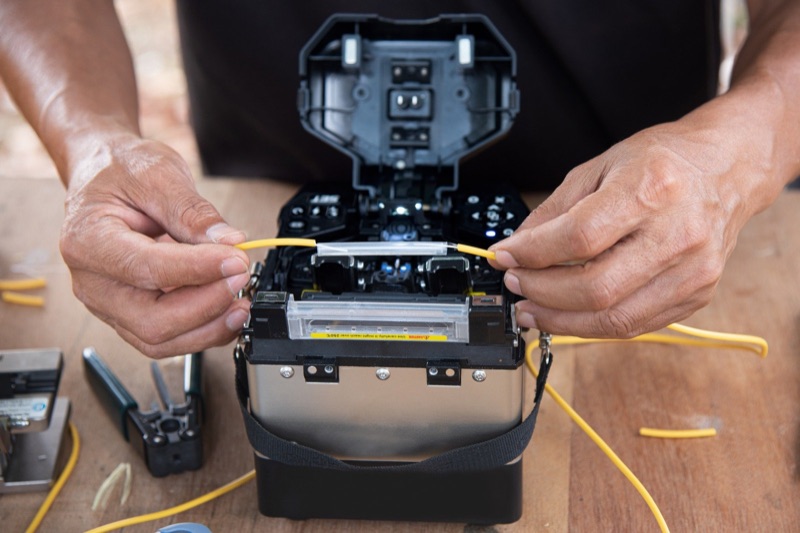
Full-size splicers are the workhorse machines used for backbone splicing, distribution cable splicing, and any work where you are sitting down at a splicing table doing dozens or hundreds of splices in a session. They have ruggedized housings for field environments, built-in splice protection sleeve heaters, and support for a wider range of fiber types and holders.
The QBL Fusion Splicer ($2,349.99) is QBL's standard fusion splicer. We do not have QBL's spec sheet for it yet, so we are not quoting its alignment method, splice loss or features here. A replacement battery ($139.99) is listed for it; confirm it fits before you order.
Best for: Backbone splicing, distribution cable, all-day splicing sessions, multi-fiber cable splicing one fiber at a time.
Ribbon Splicers
Ribbon splicers mass-splice multi-fiber ribbon cables by aligning and fusing all fibers in the ribbon simultaneously. A 12-fiber ribbon splicer completes in one cycle what would take 12 individual splices on a single-fiber splicer. The time savings are enormous on high-fiber-count cables where you may be splicing 48, 96, or 144 fibers at a single splice point.
The QBL Ribbon Fusion Splicer ($8,799.99) is QBL's ribbon splicer, for ribbon cable rather than single fibers. We do not have QBL's spec sheet for it yet, so we are not quoting its fiber count, alignment method, splice loss or features here.
Best for: Data centers, central offices, backbone and trunk cable, any installation using 12-fiber ribbon cable.
Splicer Comparison
| Feature | Palm Splicer | Fusion Splicer | Ribbon Splicer |
|---|---|---|---|
| Price | $2,349.99 | $2,349.99 | $8,799.99 |
| Fibers per splice | 1 | 1 | Up to 12 |
| Built-in heater | No (external) | Yes | Yes (ribbon heater) |
| Fiber types | SM, some MM | SM, MM | SM, MM ribbon |
| Form factor | Ultra-compact, palm-sized | Standard, ruggedized | Full-size, bench/table |
| Primary use | FTTH drops, emergency | Backbone, distribution | Data center, CO, ribbon |
Free: FTTH Splice Loss & Splicer Spec Cheat Sheet
A one-page PDF with the acceptance thresholds, core-vs-cladding spec checklist, and our splicer-by-role buying matrix. Drop your email and we'll send it over.
No spam. We'll send the resource and the occasional fiber-tooling tip. Unsubscribe anytime.
Specs That Actually Matter
Splicer spec sheets are long. Here are the five specifications that directly affect your work in the field.
Splice Loss
Splice loss is the most important number. It represents how much optical power is lost at the splice point. Modern core-alignment splicers achieve 0.02-0.05 dB on SM fiber. The industry acceptance threshold is 0.1 dB. Avoid older or cheap splicers that only offer cladding alignment -- they produce higher and less consistent splice losses because they align the outer glass cladding rather than the light-carrying core.
Splice Cycle Time
This is the time from fiber placement to completed splice, typically 8-12 seconds. On a 24-fiber splice closure, a 2-second difference per splice adds up to roughly a minute. Not a dealbreaker, but worth noting if you splice all day. More important than raw cycle time is the reliability of the alignment system -- a fast splicer that requires re-splices wastes more time than a slightly slower splicer that gets it right the first time.
Battery Life
Measured in splice-and-heat cycles per charge. A good field splicer should deliver 200+ splice-and-heat cycles per battery. If you are doing large splice counts in a single day at an aerial closure or in a manhole, battery life is critical. The QBL Fusion Splicer Replacement Battery ($139.99) provides a hot-swap option for extended field days.
Core Alignment vs Cladding Alignment
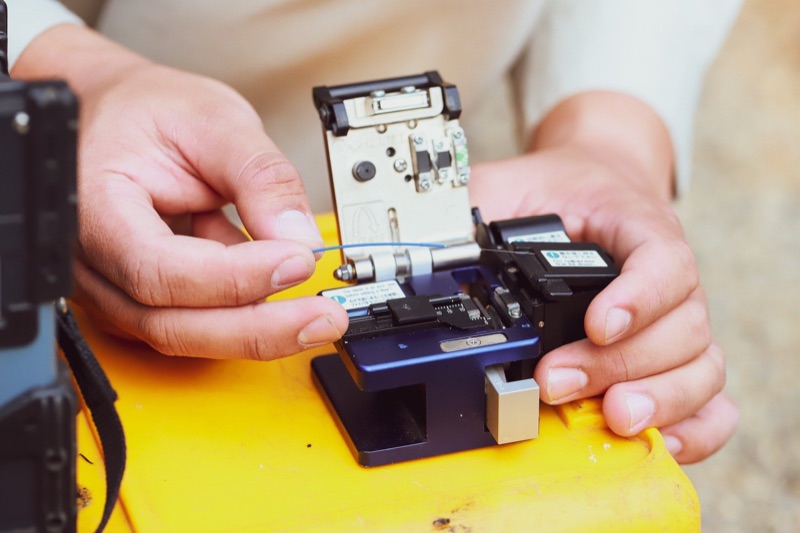
Core alignment splicers use cameras and image processing to align the actual fiber cores before splicing. This produces consistently low splice losses regardless of fiber concentricity variations. Cladding alignment splicers are cheaper but align only the outer glass surface, so core offset (common in manufactured fiber) directly increases splice loss. For professional FTTH work, core alignment is mandatory.
Heater Integration
After the fusion arc, the bare splice is protected with a heat-shrink splice protection sleeve. A splicer with a built-in heater lets you heat the sleeve while preparing the next fiber for splicing, overlapping tasks and speeding up the workflow. If the splicer does not have a built-in heater, you need a separate heat oven and it becomes a sequential process.
Hot Fusion Connectors: An Alternative to Mechanical Termination
If you already own a fusion splicer, you can use SC/APC Hot Fusion Connectors ($16.99 per 10-pack) to terminate fiber in the field. These are pre-polished connectors with a factory-loaded fiber stub inside. You fusion-splice your field fiber to the stub, producing a factory-quality termination without field polishing.
The advantages over mechanical connectors are significant: lower insertion loss (0.15-0.3 dB vs 0.3-0.5 dB), permanent bond unaffected by temperature or vibration, and no index-matching gel that can dry out over time. At $1.70 per connector, the cost per termination is slightly higher than a mechanical connector, but the performance and reliability difference is worth it for permanent installations.
Hot fusion connectors require a precision Mechanical Cleaver ($299.99) for proper fiber preparation. The cleave quality directly determines the splice quality, so do not skip this tool.
What to Buy: Recommendations by Role
FTTH Drop Installer
You install service drops and splice at the customer premises or at a pedestal. You need maximum portability and fast splice cycles.
Get: Palm Fusion Splicer + SC/APC Hot Fusion Connectors + Mechanical Cleaver
Backbone / OSP Splicer
You splice distribution and backbone cables at splice closures, often doing 24-48 fibers per closure. You need durability and a built-in heater.
Get: Fusion Splicer + Fiber Splicing Kit + Replacement Battery
Data Center Technician
You work with high-fiber-count ribbon cables in data centers and central offices. Time per fiber is your bottleneck.
New Hire Bundle
You are equipping a new technician from scratch with everything they need to start FTTH work.
Get: New Hire Fiber Tech Bundle ($5,249.99) -- QBL's bundle for a new technician. We do not have its packing list yet.
The Bottom Line
The choice comes down to the work. Single drops and building work call for a single-fiber splicer; ribbon cable calls for a ribbon splicer. Whichever you buy, ask for the spec sheet and check the alignment method and typical splice loss before you order.
If you only buy one splicer for a mixed workload, the QBL Fusion Splicer at $2,349.99 is the most versatile option. It handles everything from single drop fibers to distribution cable and works equally well on a splicing table or in a splice closure. Pair it with SC/APC Hot Fusion Connectors and a Mechanical Cleaver for field termination capability.
Ready to pick the right splicer?
Tell us your workload — drops, backbone, or ribbon — and a fiber specialist will recommend the exact splicer and consumables you need, no upsell.