The Quick Answer
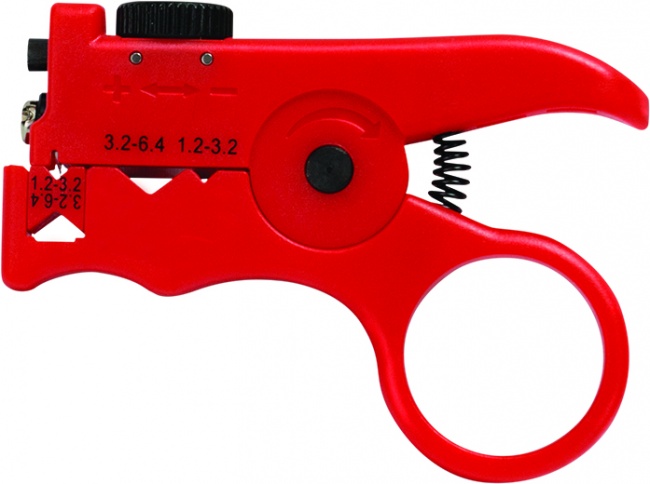
For the cable jacket, the Platinum Tools Slit & Ring Fiber Optic Cable Stripper. For the aramid yarn, Platinum Tools Fiber Optic Kevlar Scissors. For the fiber itself, the Platinum Tools 5-in-1 Fiber Optic Stripper. For the cleave, we carry QBL's Mechanical Cleaver 900um; check what your splicer or connector maker recommends first. If you want a cleaver, strippers and scissors in one bag, the Platinum Tools ECO Fiber Termination Kit includes a wheel cleaver rated to 36,000 cleaves.
Comparison
| Step | What we carry | What it does | Price |
|---|---|---|---|
| 1. Open the jacket | Platinum Tools Slit & Ring Fiber Optic Cable Stripper | Opens the cable jacket | $17.41 |
| 2. Cut the aramid yarn | Platinum Tools Fiber Optic Kevlar Scissors | Cuts aramid (Kevlar) yarn | $21.38 |
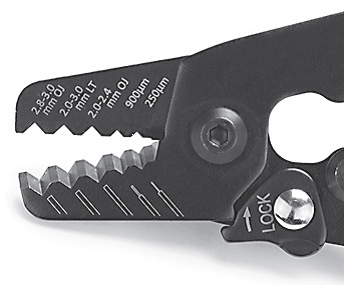
| 3. Strip buffer and coating | Platinum Tools 5-in-1 Fiber Optic Stripper | Strips buffer and coating | $25.33 |
| 4. Clean the bare fiber | Alcohol and lint-free wipes | Removes residue and dust before the cleave; we do not sell these on their own | Not sold |
| 5. Cleave | QBL Mechanical Cleaver 900um | Listed by QBL as a 900 micron mechanical cleaver | $299.99 |
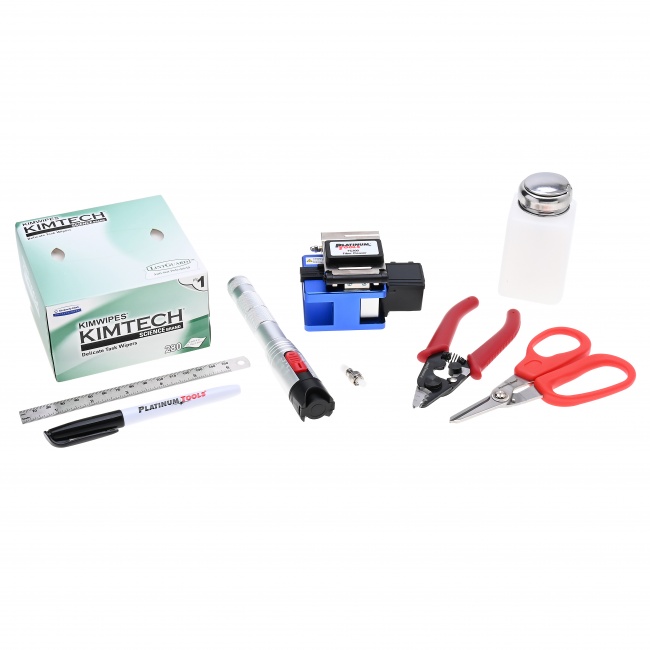
| All in one bag | Platinum Tools ECO Fiber Termination Kit | Wheel cleaver rated to 36,000 cleaves, tri-hole fiber strippers, aramid scissors, 650 nm VFL and more; no connectors | $625.29 |
Step by Step
1. Open the Cable Jacket
Our pick: the Platinum Tools Slit & Ring Fiber Optic Cable Stripper.
A slit and ring stripper scores a ring around the jacket and slits it lengthwise, so the jacket peels off without cutting into what is underneath. Check that the tool fits the jacket size of your cable before you buy.
2. Cut Back the Aramid Yarn
Our pick: Platinum Tools Fiber Optic Kevlar Scissors.
Most fiber cables carry aramid (Kevlar) yarn for pulling strength. It is tough on ordinary scissors and dulls them fast. Kevlar scissors are made for it.
3. Strip the Buffer and Coating
Our pick: the Platinum Tools 5-in-1 Fiber Optic Stripper.
Under the jacket, a fiber has a coating, and in many indoor cables a tight buffer over that. Both come off before the cleave. Use a stripper made for fiber; copper wire strippers nick the glass and the fiber breaks later. Check the sizes the stripper is made for against your fiber before you buy.
4. Clean the Bare Fiber
Wipe the stripped fiber with alcohol and a lint-free wipe before you cleave it, so coating residue and dust do not end up in the splice or the connector. We do not sell alcohol or lint-free wipes on their own. For connector end faces, see our fiber cleaners.
5. Cleave
What we carry: QBL's Mechanical Cleaver 900um, listed by QBL as a 900 micron mechanical cleaver.
The cleave has to leave a flat, square end. A poor cleave raises splice loss or causes the splicer to reject the fiber, and it ruins a mechanical connector. Check that the cleaver suits the fiber you work on before you order. We do not have a QBL spec confirming it for fusion splicing, so check what your splicer or connector maker recommends.
The Kit Option: Platinum Tools ECO Fiber Termination Kit
Best for. Techs who want the cleaver, strippers and scissors in one bag, along with a VFL.
The ECO Fiber Termination Kit includes a precision wheel cleaver rated to 36,000 cleaves, tri-hole fiber strippers, aramid (Kevlar) scissors, a 650 nm visual fault locator, batteries, a ruler, a marker, an alcohol container, wipes and a carrying bag. It does not include mechanical connectors, and we do not sell a connector made for it, so plan on sourcing those separately if you terminate with it.
QBL also lists a Fiber Splicing Kit and an FTTH Tool Kit. We do not have QBL packing lists for those yet, so we are not listing their contents here.
Cleavers We Do Not Sell
You will also see precision cleavers such as the Fujikura CT-30 and the Sumitomo FC-6. We do not sell them. If you are comparing, ask each one the questions in the next section.
How to Choose
- Your fiber. Check that each tool is made for your cable jacket, your buffer size and your coating.
- The job. Fusion splicing and mechanical connectors both need a good cleave. Check what your splicer or connector maker recommends.
- Blade life. Some makers rate their cleaver blades for a number of cleaves. The ECO kit's wheel cleaver is rated to 36,000.
- Separate tools or a kit. A kit puts the basics in one bag. Separate tools let you pick each one.
FAQ
What is the difference between 250 micron and 900 micron fiber?
250 micron is the size of the fiber with its coating. 900 micron fiber has a tight buffer over that coating, which makes it sturdier and is common in indoor cable and pigtails. Strippers and cleavers have to suit the size you work on.
How many cleaves does a cleaver blade last?
It depends on the cleaver, and not every maker states it. Platinum Tools rates the wheel cleaver in its ECO Fiber Termination Kit to 36,000 cleaves.
Do I need a precision cleaver for fusion splicing?
You need a cleaver that leaves a flat, square end, because the quality of the cleave decides much of the splice loss. Check what your splicer maker recommends.
Can I use copper wire strippers on fiber?
No. Copper strippers are not made for fiber coating and buffer, and they can nick the glass so the fiber breaks later. Use a stripper made for fiber.
What are Kevlar scissors for?
Cutting the aramid (Kevlar) yarn inside fiber cable. The yarn is tough and dulls ordinary scissors quickly.
Shop Fiber Tools
See every cleaver, stripper and fiber kit we carry in tool kits.
Related reading: