Why Standard PON Test Gear Does Not Work
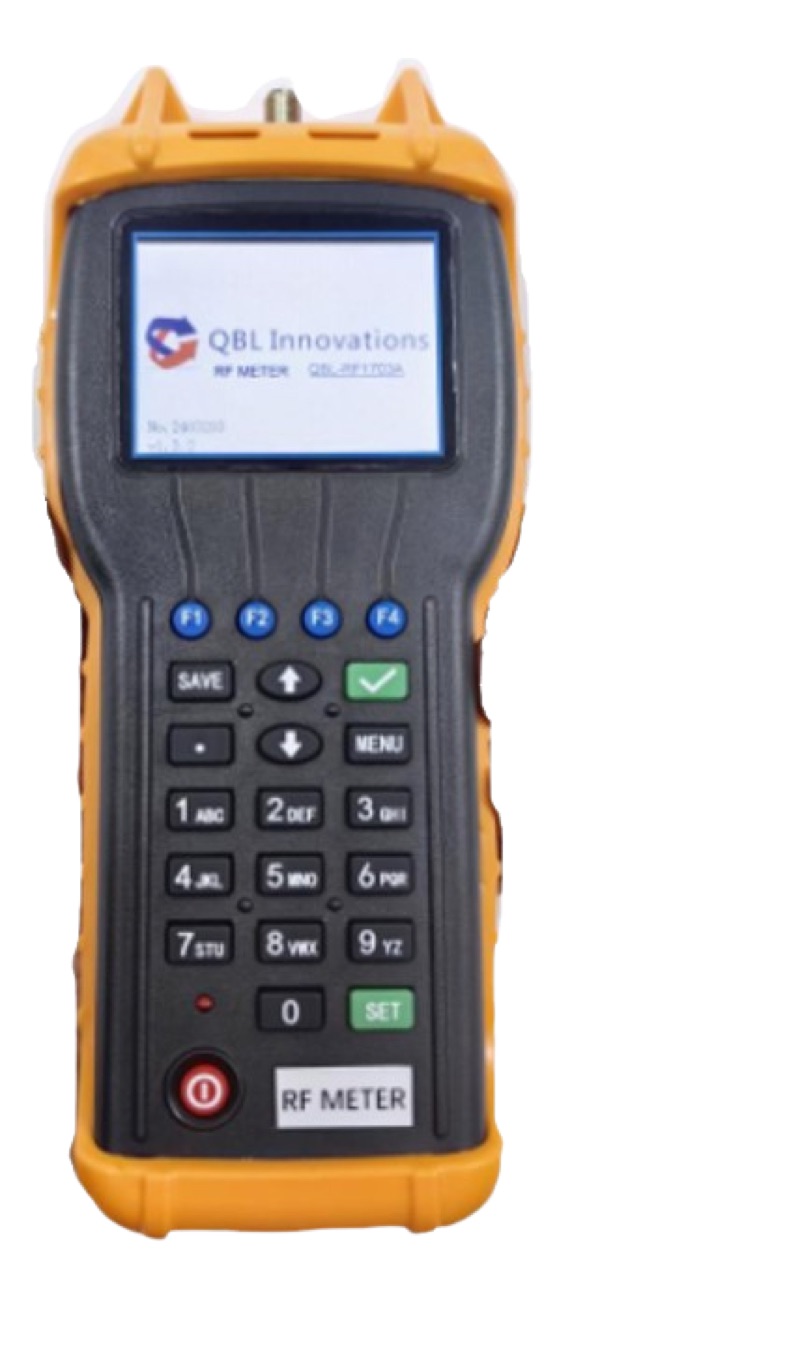
A GPON-vintage power meter reads 1310/1490/1550nm. XG-PON and XGS-PON live at 1270 (upstream) and 1577 (downstream) — wavelengths the older meters are not calibrated to read. Plug a GPON meter into an XG-PON link and you will get a number, but the calibration error can be 1-2 dB.
Operators standardizing on XG-PON or XGS-PON need wavelength-selective meters that filter the specific upstream and downstream wavelengths and report power separately for each.
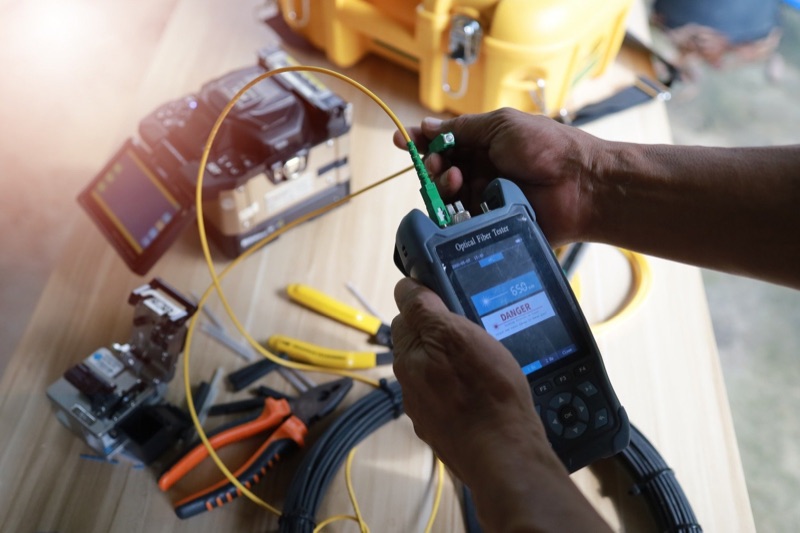
The Four Categories of XG-PON Test Equipment
| Category | What It Does | When Used |
|---|---|---|
| PON power meter | Reads live PON optical power | Every commissioning, troubleshooting |
| OTDR | Characterizes fiber length, splice/connector loss | OSP commissioning, fault location |
| Fiber microscope | Inspects connector end-faces | Before every mate |
| Fiber identifier | Detects live traffic without breaking circuit | Before any disconnect on live network |
PON Power Meter Selection
Pass-Through Design
An XG-PON power meter is typically a pass-through device: the fiber goes in one port, optical taps split off enough light to measure each wavelength, and the unaffected signal continues out the other port. This lets the tech measure power on a live PON without dropping the customer's service.
Wavelength Coverage
Match the meter to the wavelengths your network uses. Most operators want a meter that covers GPON, XG-PON/XGS-PON, and (increasingly) 25G-PON in a single instrument so the same tool works as the network evolves.
XG-PON Power Meter Advanced
Pass-through meter with full XG-PON / XGS-PON wavelength coverage. Adds advanced features like burst-mode upstream measurement and data logging.
XGS/GPON Power Meter
$484.99 — Standard pass-through meter for GPON + XGS-PON deployments.
25G PON Power Meter
Adds 1342nm 25G-PON coverage. Future-proof for crews planning the 25G upgrade.
PON Power Meter Pro
GPON-only. Cheaper option for crews that have not migrated to XG-PON yet.
For a deeper comparison see our GPON vs XGS-PON power meters guide and best fiber optic power meters of 2026.
OTDR Selection for XG-PON
An OTDR for FTTH access work needs three things: enough launch power to penetrate splitters, a short dead zone for short drops, and pulse widths optimized for FTTH distances.
Mini OTDR (Recommended for FTTH)
The Fiber Ranger Mini OTDR ($579.99) is sized for FTTH access work. Auto-test mode optimized for 1.25-25 km PON links. Reads through 1:32 splitters. Battery-powered for field use.
OTDR Specs to Look For
- Wavelengths: 1310nm and 1550nm minimum; 1625nm for in-service testing
- Dynamic range: 30 dB or more at 1550nm to penetrate 1:32 split with margin
- Pulse width: 5 ns to 20 us for short drops to long-reach feeders
- Event dead zone: Under 1m for short drop testing
- PON-aware analysis: Auto-detection of splitter location and per-leg loss
For more on OTDR fundamentals see our OTDR basics article.
Fiber Inspection Microscope
XG-PON and XGS-PON are more sensitive to connector contamination than GPON because of the higher line rate and tighter receiver budget. A microscope is not optional.
The WiFi/USB Fiber Inspection Microscope ($1,249.99) connects to a phone or tablet over WiFi and auto-grades end-faces against IEC 61300-3-35. Works with SC, LC, FC, and ST adapters.
What the inspection catches that you would otherwise miss:
- Sub-micron particles on the core that add 1-3 dB
- Skin oil residue invisible to the naked eye
- Surface scratches from previous mating with a damaged connector
- Polish defects from poor field termination
Optical Fiber Identifier
On a live PON, you cannot disconnect a fiber to test it without taking down the service for everyone on that splitter. The Optical Fiber Identifier ($539.99) clamps onto a fiber and detects whether it carries traffic, which direction the traffic flows, and the relative power level — all without breaking the circuit.
Use cases:
- Identify which of 32 fibers in a splitter cabinet feeds the customer you are servicing
- Verify a fiber is dark before disconnecting
- Confirm signal direction in a complex distribution panel
- Spot-check downstream power without disconnecting the ONT
VFL (Visual Fault Locator)
The VFL is the cheapest tool in the kit but the one a tech reaches for first in troubleshooting. It shoots visible red light through the fiber to verify continuity and locate macrobends.
- VFL Pen 5km ($104.99) — standard pen form factor for short and medium drops
- VFL Pen 30km — for longer distribution runs
Replacement Connectors and Adapters
Test equipment connectors wear out with use. A loose or damaged adapter on the meter introduces measurement error. Keep replacement adapters on hand:
- PON Meter Replacement Connectors
- Optical Power Meter with LC Adapters ($339.99) for off-network jumper testing
Bundle Pricing
The New Hire Fiber Tech Bundle ($5,249.99) is QBL's bundle for a new technician. We do not have its packing list yet, so we do not list what is in it.
Compared to buying à la carte:
| Item | À la Carte Price |
|---|---|
| XGS/GPON Power Meter | $484.99 |
| Fiber Ranger OTDR | $579.99 |
| WiFi Microscope | $1,249.99 |
| Fiber Identifier | $539.99 |
| VFL 5km | $104.99 |
| Fusion Splicer | $2,349.99 |
| Splicing Kit | $399.99 |
| Laser Goggles | $47.99 |
| Total | $5,757.92 |
| Bundle | $5,249.99 |
What ISP Operations Should Standardize
For an ISP rolling out XG-PON or XGS-PON across multiple crews, standardize on one PON meter model, one OTDR model, and one microscope model. Benefits:
- One training curriculum for all techs
- Spare parts interchangeability
- Consistent test record format
- Volume pricing on consumables and adapters
- Easier troubleshooting when one tech needs to interpret another's readings
Frequently Asked Questions
Can I do an XG-PON commissioning with just a power meter?
For short residential drops, yes. For longer drops, MDU work, or any installation requiring documentation beyond power readings, you also need an OTDR. Most carriers require OTDR documentation for distribution and feeder fiber.
Do I need different test gear for XG-PON vs XGS-PON?
No. Both use the same wavelengths (1577nm down, 1270nm up). A single XGS-capable meter handles both. The only differences are at the OLT and ONT, not in the test equipment.
What about test equipment for higher-tier 25G-PON?
The 25G PON Power Meter adds 1342nm coverage while still reading XGS-PON and GPON wavelengths. If you anticipate any 25G work in the next 3-5 years, buy the 25G-capable meter now.
Are pre-owned PON meters worth considering?
Only from reputable test equipment dealers who recalibrate before resale. PON meters lose calibration over time, especially after rough handling. A miscalibrated meter is worse than no meter because it gives confident wrong answers.
The Bottom Line
XG-PON and XGS-PON test equipment investment is straightforward: wavelength-selective PON meter, mini OTDR, fiber microscope, fiber identifier, VFL. Total around $3,500-$5,000 for a fully-equipped XG-PON tech. The New Hire Fiber Tech Bundle is $5,249.99; we do not have its packing list yet.
For network-architecture context see XGS-PON vs GPON vs 25G-PON. For full toolkit organization see how to set up an FTTH test toolkit.