The Data Center Density Problem
Modern data centers demand ever-higher port density on switch faceplates and patch panels. A 1U rack of 32 QSFP-DD ports operating at 400Gbps each delivers 12.8 Tbps in a single rack unit -- and that is now mainstream, not aspirational. Each QSFP-DD port needs an optical interface, and that interface must fit in a footprint approximately 18mm x 8mm.
Standard LC duplex connectors, with their 6.25mm ferrule pitch and external duplex clip, do not fit comfortably in QSFP-DD footprints when designers want to support breakout configurations or alternative transceiver form factors. Two industry approaches emerged: shrink the connector entirely (CS, MDC, SN) or repackage the LC into denser cable assemblies (LC uniboot).
The CS Connector
The CS connector was developed by SENKO Advanced Components as a small form factor (SFF) duplex connector for high-density transceiver applications. The design uses two 1.25mm ceramic ferrules (the same as LC) but with a tighter 3.8mm pitch between the two ferrules instead of LC duplex's 6.25mm pitch.
Key Specifications
- Ferrule diameter: 1.25mm ceramic (same as LC)
- Ferrule pitch: 3.8mm (vs 6.25mm for LC duplex)
- Latching mechanism: Push-pull with internal latch
- Polish types: UPC and APC available
- Footprint reduction vs LC duplex: Approximately 40%
- Density: Two CS connectors fit in approximately the space of one LC duplex
Applications
- 400G QSFP-DD breakout: Single transceiver fans out to multiple 100G or 200G CS-terminated links
- 800G OSFP and QSFP-DD800: CS interfaces for various breakout and direct-attach configurations
- High-density patch panels: Where the volume of fiber per rack unit is the limiting factor
- Coherent pluggable optics: Some 400ZR and 800ZR coherent transceivers specify CS
CS connectors share electrical/optical performance with LC since the underlying ferrule technology is identical. Insertion loss and return loss specifications match LC. The advantage is purely mechanical density.
LC Uniboot and LC Mini Variants
The LC uniboot patch cord takes a different approach to density. Instead of redesigning the connector, the cable construction is changed. A standard LC duplex patch cord has two separate fiber jackets joined by a duplex clip at the connector end. An LC uniboot has a single round cable jacket containing both fibers, with a single integrated boot that holds the two LC connectors.
Key Characteristics
- Connector: Standard LC (1.25mm ferrule, 6.25mm pitch in duplex)
- Cable construction: Single round jacket containing both fibers
- Bend radius: Improved over standard LC duplex due to round profile
- Cable diameter: Typically 2.0-3.0mm (vs 2 x 1.6mm separate jackets)
- Cable management: Significantly easier in dense bundles
Polarity Switching
One operational benefit of LC uniboot is field-switchable polarity. Some LC uniboot designs allow the technician to swap the A/B fiber assignment at the connector boot without cutting and re-terminating the cable. This is useful for correcting polarity errors after installation or for adapting cables between Method A and Method B polarity systems.
What "LC Mini" Means
The term "LC mini" is used inconsistently in the industry. Sometimes it refers to LC uniboot construction. Sometimes it refers to genuinely miniaturized LC variants (rare and not standardized). For most practical purposes, when someone says "LC mini," they mean LC uniboot with a small-diameter cable. There is no formal "mini-LC" connector standard with different ferrule dimensions from standard LC.
CS vs LC Uniboot: Side by Side
| Specification | CS | LC Uniboot |
|---|---|---|
| Ferrule Diameter | 1.25mm | 1.25mm |
| Ferrule Pitch (Duplex) | 3.8mm | 6.25mm |
| Connector Footprint | ~40% smaller than LC duplex | Same as LC duplex |
| Cable Bulk | Small | Reduced (single jacket) |
| Compatibility with LC Adapters | No (different mechanical interface) | Yes (uses LC connectors) |
| Polish Types | UPC, APC | UPC, APC |
| Primary Application | 400G/800G transceivers, dense breakouts | High-density LC patch panels, dense bundle management |
| Ecosystem Maturity | Growing (newer) | Mature (LC ecosystem) |
When to Use CS
CS is the right choice when:
- Your transceiver vendor specifies CS: 400G and 800G transceivers from major vendors (Broadcom, Marvell, Innolight, Cisco) increasingly specify CS for breakout and direct-attach configurations.
- Maximum panel density is required: Hyperscale data centers and high-performance computing deployments where every additional port per RU saves rack space.
- Future-proofing for 800G+ generations: The industry trajectory points toward CS, MDC, SN, or similar SFF connectors as standard for 800G and 1.6T transceivers.
When to Use LC Uniboot
LC uniboot is the right choice when:
- You need to maintain LC compatibility: Your patch panels, structured cabling, and existing infrastructure are all LC. Uniboot patch cords mate with standard LC adapters.
- Cable management is the bottleneck: Bundle thickness and routing are limiting factors more than connector footprint.
- You want field-switchable polarity: The polarity-switching feature simplifies field operations.
- Existing 100G/200G/400G LC-based infrastructure: No reason to introduce a new connector type when LC supports your speeds adequately.
For background on LC's role in data centers, see our LC vs SC vs ST vs FC connector guide.
Cleaning the Smaller Form Factors
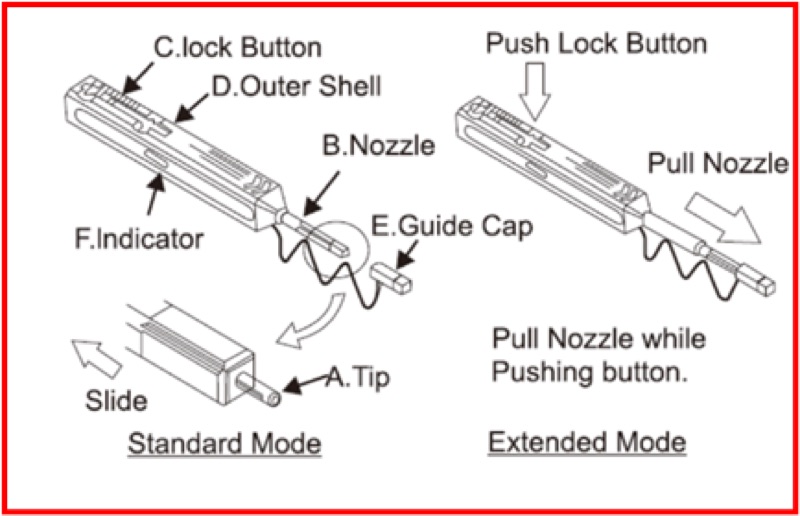
Small form factor connectors require cleaners designed for their dimensions. CS uses 1.25mm ferrules, the same as LC, so 1.25mm one-click cleaners (CLeP-125 type) work for both. The reduced spacing in CS means less room for cleaner alignment, but the cleaning principle is identical.
For dense panels with mixed connector types, the CLeP-125 mini fiber cleaner handles LC and CS. For 2.5mm ferrules (SC, FC, ST), the CLeP-25 is the equivalent. The CS connector end-face cleaner is designed specifically for CS form factor accessibility in dense panels.
For the full cleaning workflow, see our fiber cleaning guide and endface cleaning guide.
Other Small Form Factor Connectors
CS is one of several SFF duplex connectors competing for the high-density data center market. The major alternatives:
- MDC (US Conec): 3.1mm ferrule pitch, slightly smaller than CS. Different mechanical design and not interchangeable with CS.
- SN (US Conec): A variant approach with 4.2mm pitch, designed for specific transceiver applications.
- MMC and MDC8: Higher fiber count variants for 16-fiber and 32-fiber applications.
The market is in transition. Transceiver vendors choose one or two SFF connector types to support, and patch cord/cable manufacturers stock the formats that match transceiver demand. For most enterprise data centers in 2026, CS and LC uniboot cover the practical use cases. Hyperscale operators with custom transceiver designs may use MDC, SN, or other variants based on vendor relationships.
Practical Decision Framework
- Building a new 400G/800G data center spine? Match your transceiver vendor's specified connector. CS, MDC, or LC depending on the optic.
- Upgrading an existing LC infrastructure? LC uniboot. Stay LC-compatible with reduced cable bulk.
- Mixed environment with both legacy LC and new SFF transceivers? Stock both LC uniboot and CS patch cords. Use hybrid breakout cables (CS-to-LC) at the transceiver-to-patch-panel transition where needed.
- Cost-sensitive standard 100G/400G with no extreme density requirement? Standard LC duplex remains the most cost-effective and broadly supported option.
Frequently Asked Questions
What is a CS connector?
The CS connector is a small form factor duplex fiber connector developed by SENKO. It uses two 1.25mm ferrules with 3.8mm pitch (vs LC duplex 6.25mm pitch), reducing the connector footprint by approximately 40% compared to LC duplex. CS is designed for high-density 400G and 800G QSFP-DD and OSFP transceivers where panel space is at a premium. Despite the smaller size, CS supports the same single-mode and multimode applications as LC.
Is CS the same as MDC connector?
No. CS and MDC are competing small form factor duplex connector standards. CS was developed by SENKO and uses a 3.8mm ferrule pitch with a familiar push-pull latching mechanism. MDC was developed by US Conec and uses a 3.1mm ferrule pitch with a different mechanical design. Both connectors support similar density gains over LC, but they are not mechanically interchangeable.
What is an LC uniboot or LC mini?
An LC uniboot patch cord uses two LC connectors with a single round cable jacket housing both fibers and a unified strain relief boot. This reduces cable bulk significantly compared to standard LC duplex. LC mini is an informal term that sometimes refers to LC uniboot and sometimes to truly miniaturized LC variants. The standard LC ferrule itself is unchanged at 1.25mm. Uniboot construction is the most common LC density innovation in modern data centers.
Can I mate a CS connector to an LC adapter?
No. CS and LC use different mechanical housings and different ferrule pitches in duplex. While the underlying ferrule diameter is the same (1.25mm), the latching mechanism and connector body do not interoperate. Hybrid CS-to-LC breakout cables exist for connecting CS-equipped transceivers to LC-equipped patch panels.
Related Reading
- LC vs SC vs ST vs FC -- the broader fiber connector landscape.
- MPO/MTP Fiber Connector Guide -- the multi-fiber alternative for parallel optics.
- How to Choose the Right Fiber Connector -- the broader connector selection framework.
High-Density Cleaning Tools and Patch Cords
CS and LC cleaners, mini fiber cleaners, and patch cords for high-density 400G and 800G data center deployments.