The Number One Cause of Fiber Failures
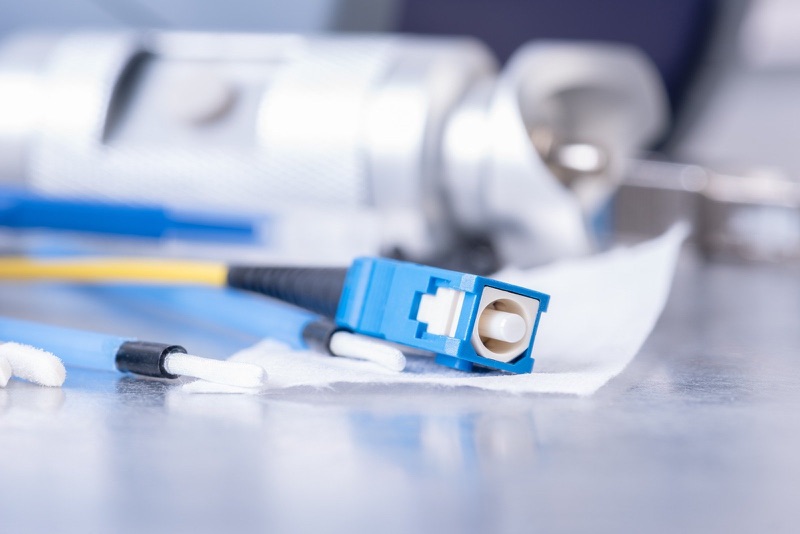
The single-mode fiber core is 9 micrometers in diameter. A typical dust particle is 10-50 micrometers -- larger than the entire core. When that particle sits on the connector endface and you mate the connector, three things happen simultaneously: light is scattered or absorbed (insertion loss), the particle creates a reflective surface (back-reflection), and the physical contact pressure can embed the particle into the glass, permanently scratching the ferrule.
The damage is cumulative. Every time you mate a contaminated connector, you risk adding a new scratch. Scratches in the core zone (Zone A) cannot be cleaned away -- they are permanent, and the connector must be replaced or the fiber re-terminated.
How One-Click Cleaners Work
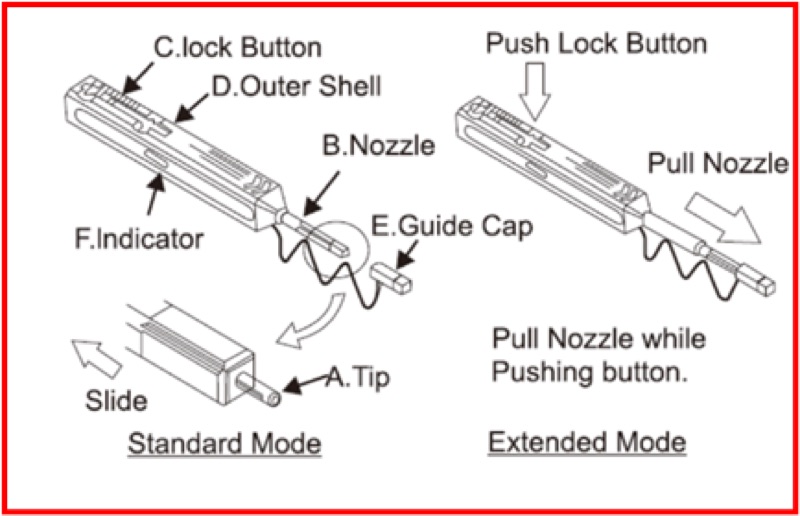
One-click cleaners (like the CLEP series) use a spring-loaded mechanism that pushes a cleaning tape against the connector endface with a precise, consistent pressure. Push the cleaner onto the ferrule until you hear or feel the click -- one push completes one cleaning cycle. The spring ensures the same cleaning force every time, regardless of who is using the tool.
Inside the cleaner, a spool of lint-free cleaning tape advances to a fresh surface after each click. This means every cleaning cycle uses a clean section of tape. You never re-clean with a used surface, which would just redistribute contamination instead of removing it.
Matching the cleaner to the connector
Connector ferrules come in standard sizes, and each size needs the correct cleaner. Using the wrong size means the cleaning tape does not make full contact with the endface.
- 2.5mm ferrule (SC, FC, ST): CLEP 2.5mm Mini ($37.99) or CLEP 2.5mm Long-Reach ($37.99)
- 1.25mm ferrule (LC, MU): CLEP 1.25mm Mini ($37.99) or CLEP 1.25mm Long-Reach ($37.99)
- MPO/MTP (multi-fiber array): MPO Cleaner P or T Type ($67.99)
- Universal (multiple ferrule sizes): Opti-Fiber Cleaner ($69.99)
The Mini and Long-Reach cleaners have the same internal mechanism and 800+ cleaning cycles per cartridge. The Long-Reach has an extended barrel for cleaning connectors recessed inside adapter panels, enclosures, and high-density patch panels where the Mini cannot physically reach the ferrule.
The Inspect-Before-You-Connect Protocol
Every professional fiber team follows this sequence. No connector gets mated without going through it.
1. Inspect
Before cleaning, inspect the connector endface with a fiber inspection microscope at 200x or higher magnification. The QBL WiFi/USB Fiber Inspection Microscope ($1,249.99) connects to your phone, tablet, or laptop and provides the magnification needed. Inspection tells you what type of contamination you are dealing with -- dust requires dry cleaning, oil films require wet cleaning, and scratches cannot be cleaned at all.
2. Dry clean
Always try a dry clean first. One click with the appropriate CLEP cleaner removes 90% or more of particulate contamination. It takes less than 5 seconds.
3. Re-inspect
Check the endface again under the microscope. If it passes IEC 61300-3-35 criteria (no defects in the core zone, no scratches larger than 3 micrometers in the cladding zone), connect immediately.
4. Wet clean if needed
If contamination remains -- typically oil films from fingerprints or index-matching gel -- apply fiber-grade IPA (99%+ isopropyl alcohol) to a lint-free wipe and clean the ferrule. Follow immediately with a dry clean to remove residual solvent. Never leave solvent on the endface.
5. Connect immediately
Once the endface passes inspection, mate the connector without delay. In field environments, a clean endface begins collecting airborne particles within seconds. Do not set the connector down, put a dust cap back on and remove it again, or touch the ferrule. Clean, inspect, connect -- in that order, without pause.
Common Cleaning Mistakes
- Skipping cleaning entirely. "It looks clean" is not a cleaning protocol. Particles that cause problems are invisible to the naked eye. The 9-micrometer fiber core is smaller than a human hair.
- Cleaning without inspecting. If you do not inspect first, you do not know what you are dealing with. An oil film requires wet cleaning -- dry cleaning alone just smears it across the endface.
- Touching the ferrule. Fingerprints deposit oil directly onto the endface. Always handle connectors by the housing, never by the ferrule tip.
- Using canned air. Compressed gas dusters can deposit propellant residue on the endface. Use only proper fiber cleaning tools.
- Setting down clean connectors. A clean connector on a work surface for 30 seconds is no longer clean. The clean-inspect-connect sequence must be continuous.
- Reusing cleaning surfaces. One-click cleaners advance automatically. If using wipes, use a fresh section for each wipe. Re-wiping with a contaminated surface redistributes particles instead of removing them.
The Cost of Not Cleaning
A CLEP cleaner costs $37.99 and provides 800+ cleaning cycles. That is less than 5 cents per connector cleaned. Compare that to the cost of a single troubleshooting truck roll -- typically $150-$500 depending on distance and labor rates -- to diagnose a problem that turns out to be a dirty connector.
The math is even worse if the contaminated connector scratches the ferrule. Now you are replacing the connector or re-terminating the fiber, which requires a fusion splicer, splice-on connectors, and an additional 15-30 minutes per termination. All because a 5-cent, 10-second cleaning step was skipped.
Clean every connector, every time, no exceptions.
Get the Right Cleaning Tools
One-click cleaners for every connector type, inspection microscopes, and complete cleaning kits for field technicians.