Why a Cleaning Kit Matters
A cleaning kit is not a luxury. It is the minimum equipment to run the inspect-before-you-connect protocol reliably across a varied workload. The kit also signals professionalism: customers see a tech with proper tools and saved inspection images and they trust the install. The same customer watching a tech mate connectors without inspection draws very different conclusions.
The Core Kit Components
Every fiber cleaning kit, regardless of specialty, needs the following five categories of equipment.
1. One-Click Cleaners (Multiple Sizes)
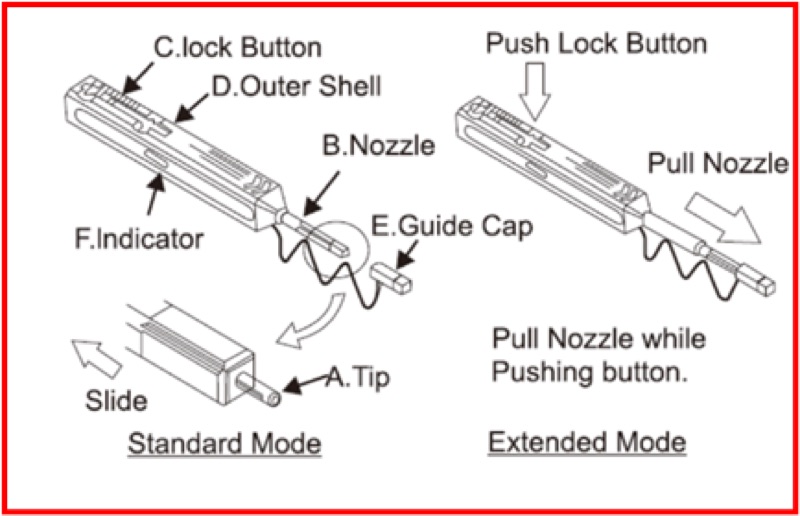
Dry cleaning is the default first step. You need a one-click cleaner sized for every ferrule type in your environment. At minimum that means 2.5mm (SC, FC, ST) and 1.25mm (LC, MU). MPO-equipped sites add an MPO cleaner. CS connector environments add a CS cleaner.
2. Wet Cleaning Supplies
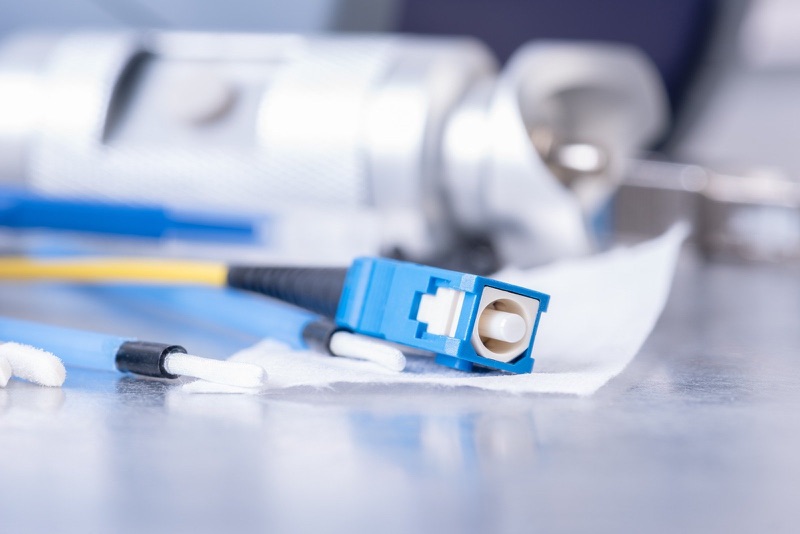
99% isopropyl alcohol in a small sealed container plus a stack of lint-free fiber-grade cleaning wipes. Wet cleaning is escalation, not default, but you need the supplies on hand for the 10% of cleans that need it.
3. Inspection Scope
A 200x or higher fiber inspection microscope. Without it, you cannot verify whether cleaning worked. Auto pass/fail scopes are the modern standard.
4. Inspection Tips
The scope nose adapters that mate the optics with each connector type. LC/APC requires both male and female tips; SC and other 2.5mm connectors usually use a universal 2.5mm tip; MPO requires a dedicated MPO tip.
5. Carrying Case
A small zippered case or hard case keeps everything organized, protects the optics, and keeps wipes from contaminating cleaners. Many pre-built kits include a case.
The Pre-Built Option
The fastest way to a complete cleaning kit is to buy one pre-built. The Fiber Cleaning Kit ($99.99) bundles common cleaning supplies into a single package. It is the recommended starting point for techs assembling their first cleaning kit, for shops outfitting multiple techs, or for anyone who wants a known-good baseline.
From the pre-built kit, add specialty items based on what you actually encounter:
- Add an MPO cleaner if any of your work involves data center or parallel optics.
- Add long-reach cleaners (2.5mm and 1.25mm) if you work in high-density patch panels.
- Add an inspection scope separately; the cleaning kit alone does not include scope hardware.
- Add a CS cleaner if you encounter the next-generation CS connector format.
FTTH / Drop Cable Kit
FTTH work is dominated by SC/APC trunk and distribution and LC/APC drop connections. The kit prioritizes portability and APC capability.
| Item | Quantity | Purpose |
|---|---|---|
| CLEP 2.5mm Mini | 1-2 | SC/APC distribution and trunk cleaning |
| CLEP 1.25mm Mini | 1-2 | LC/APC drop and patch cord cleaning |
| QBL WiFi Fiber Microscope | 1 | Inspection and pass/fail documentation |
| LC/APC Female Tip | 1 | Inspect LC/APC drop patch cord ends |
| 99% IPA + lint-free wipes | 1 set | Wet cleaning for oil and film escalation |
| Pre-built Fiber Cleaning Kit | 1 | Bundles wipes, IPA, common supplies |
For FTTH techs who also do termination and splicing, pair the cleaning kit with the FTTH Tool Kit for a complete drop cable installation rig.
Data Center Kit
Data center work emphasizes high-density LC and MPO connections in long-reach panels. The kit prioritizes long-reach cleaners and MPO-specific tools.
| Item | Quantity | Purpose |
|---|---|---|
| CLEP 1.25mm Long-Reach | 2-3 | LC connectors in dense patch panels |
| CLEP 2.5mm Long-Reach | 1 | SC trunk cabling in panels |
| MPO P or T Type | 1 | MPO/MTP ribbon connectors |
| MPO R Type | 1 (high volume) | Bench-side MPO for high-volume cleaning |
| Opti-Fiber Cleaner | 1 | Universal backup for both ferrule sizes |
| QBL WiFi Fiber Microscope | 1 | Inspection with MPO tip support |
| LC/APC Male + Female Tips | 1 each | Bulkhead and patch cord LC inspection |
New Hire / Apprentice Setup
Outfitting a new fiber tech for general field work means covering the basics without overspending on specialty tools they may not use right away.
Starter Kit
Pre-built cleaning supplies plus the basic cleaners.
Fiber Cleaning Kit ($99.99) plus 2.5mm and 1.25mm mini cleaners.
Inspection Add-On
Auto pass/fail scope to support the inspect-before-connect protocol.
QBL WiFi Fiber Microscope ($1,249.99) is a one-time investment that pays back on the first prevented troubleshooting call.
Onboarding Bundle
QBL's New Hire Fiber Tech Bundle. We do not have its packing list yet.
Contact us for the contents before you order.
Consumables and Replenishment
The kit is not static. Several items deplete with use and need replenishment on a known schedule.
One-Click Cleaners
600 to 800 cleans per cassette. Heavy field use depletes a cleaner in about six months. The cleaner physically stops clicking when the ribbon runs out, which is the reliable end-of-life signal. Keep one spare of each ferrule size in the kit.
Cleaning Wipes
Single-use. Plan replenishment based on consumption. Heavy wet cleaning users go through a pack a month. Keep at least one extra pack in the kit.
Isopropyl Alcohol
A small bottle (50-100mL) lasts months because each wet clean uses only a few drops. Replace if the bottle is more than a year old (purity degrades with air exposure).
Inspection Scope Battery
Wireless scopes need charging. Keep the charger in the kit and check battery before each shift. A scope with a dead battery is just dead weight.
Optional Specialty Items
Beyond the core kit, several specialty items deserve consideration based on the work you actually do.
- CS Connector Cleaner ($72.99): If you work with the next-generation CS (Compact Simplex) connector format, you need a CS-specific cleaner.
- Fiber Lock Mini Cleaner: Alternative one-click cleaner with a secure cap retention design that prevents losing the cap in confined work areas.
- Fiber Lock Long Cleaner: Long-reach version of the Fiber Lock for high-density panel work.
- Optical Power Meter: Pair with a light source to verify post-cleaning insertion loss for full link certification.
- VFL Pen ($104.99): Visual fault locator for tracing fiber and finding macro bends in patch cords during installation.
- Laser Safety Goggles: Rated for 800 to 1755 nm, for work near infrared sources such as an OTDR or active fiber. Not protection from a VFL's visible red light.
The Bottom Line
A fiber cleaning kit is not optional equipment. It is the minimum required tooling to run the inspect-before-you-connect protocol that prevents 80% of fiber problems. Build it around your actual workload: FTTH techs prioritize SC/APC and LC/APC mini cleaners; data center techs prioritize LC long-reach and MPO; new hires get a pre-built kit plus an inspection scope.
Buy the right tools once. Maintain consumables on a schedule. The kit pays for itself the first time it prevents a troubleshooting truck roll caused by a contaminated connector. For more on the cleaning workflow itself, see Fiber Optic Cleaning Best Practices. For inspection-focused tools, see How to Inspect Fiber Connectors with a Microscope.