The Quick Answer
The Cassette Architecture
Cassette architecture is the dominant pattern in enterprise data centers. An MPO trunk runs between two distribution areas (for example MDA to HDA, or HDA to EDA). At each end, the trunk plugs into the back of a fiber cassette. The cassette's front presents 12 or 24 LC duplex ports. Equipment connects to those LC ports with standard LC duplex patch cords like the SM LC/UPC Duplex Patch Cord or the MM OM4 Simplex Jumper.
Channel Composition
- Equipment transceiver to LC patch cord (1 LC pair)
- LC patch cord to cassette front (1 LC pair)
- Cassette internal fiber to cassette back MPO (1 MPO pair)
- MPO trunk run (no intermediate connectors)
- Cassette back MPO to far cassette internal fiber (1 MPO pair)
- Cassette front LC to far LC patch cord (1 LC pair)
- LC patch cord to far transceiver (1 LC pair)
Total connectors in the channel: 4 LC duplex pairs and 2 MPO pairs.
Strengths
- Universal compatibility. Works with any LC duplex transceiver, which covers the vast majority of equipment in service.
- Easy moves and adds. A jumper change at the cassette front does not disturb the permanent trunk.
- Familiar to all techs. LC duplex patching is the most common fiber operation in any data center.
Weaknesses
- Higher insertion loss. Adds approximately 0.4 to 0.6 dB per cassette pair vs direct MPO.
- More connectors to clean and inspect. Each LC pair is a potential failure point.
- Wastes density when transceivers are MPO-native. Breaking out to LC then patching back to a parallel-optic MPO transceiver is wasted hops.
The Direct Trunk Architecture
Direct trunk architecture skips the cassette and patches MPO trunks directly to MPO equipment interfaces. The trunk lands in an MPO bulkhead adapter panel (sometimes called a pass-through panel). MPO patch cords connect the front of that panel to the equipment transceiver MPO ports.
Channel Composition
- Equipment transceiver to MPO patch cord (1 MPO pair)
- MPO patch cord to bulkhead adapter (1 MPO pair)
- MPO trunk run (no intermediate connectors)
- Bulkhead adapter to far MPO patch cord (1 MPO pair)
- MPO patch cord to far transceiver (1 MPO pair)
Total connectors in the channel: 4 MPO pairs (no LC).
Strengths
- Lower insertion loss. Eliminates the cassette pair, saving approximately 0.4 to 0.6 dB.
- Higher density. A 1U panel can hold many more MPO bulkhead adapters than LC duplex ports.
- Native parallel optic support. Direct mating to SR4, SR8, DR4 transceivers without a fan-out step.
Weaknesses
- Limited to MPO-native equipment. Cannot patch an LC duplex transceiver without a fan-out cassette in the path.
- Less common patching skill. Some techs are unfamiliar with MPO patching, cleaning, and inspection.
- MPO patch cord cost. MPO jumpers are more expensive than LC duplex jumpers and consume more storage space.
Side-by-Side Comparison
| Aspect | Cassette Architecture | Direct Trunk Architecture |
|---|---|---|
| Channel connector count | 4 LC + 2 MPO pairs | 4 MPO pairs |
| Typical channel loss adder | 1.5 to 2.0 dB | 1.0 to 1.5 dB |
| Equipment patch cord | LC duplex | MPO-12 or MPO-24 |
| Density per 1U | 24 to 96 LC ports | 48 to 144 MPO positions |
| Migration to direct trunk | Replace cassette with bulkhead panel | Already direct |
| Best for | LC duplex transceivers, mixed gear | Parallel optic transceivers |
| Cleaning workload | More LC connectors to clean | Fewer endfaces, but each MPO is harder |
Loss Budget Impact
For 100GBASE-SR4 with a 1.9 dB channel loss budget, every connector counts. A typical fiber attenuation contribution at 100 m of OM4 is about 0.35 dB. That leaves about 1.55 dB for connectors. At 0.25 dB per connector pair (a good MPO connector), you can afford about 6 connector pairs. Cassette architecture (4 LC + 2 MPO) is right at the edge. Direct trunk (4 MPO) gives you margin.
For 400GBASE-SR8 with the same 1.9 dB budget, the math is even tighter because the OM4 fiber attenuation has not changed but the channel reach is similar. Direct trunk architecture is increasingly the right choice for 400G short-reach applications because it saves a connector pair worth of loss.
Mixed Architecture: The Pragmatic Approach
Most modern data centers run both architectures. The deployment pattern looks like this:
- General compute and storage cabinets use cassettes because the equipment is dominated by LC duplex transceivers (1G, 10G LR, 25G LR, 100G DR1).
- Network switches and aggregation often use direct MPO trunks for short-reach 100G or 400G uplinks where the equipment is parallel-optic native.
- AI/ML compute and high-performance storage use direct MPO trunks for low loss and high density.
- Inter-row backbone uses MPO trunks regardless of the end-point architecture; the trunk is universal and the choice of cassette vs bulkhead panel is made at each end independently.
The architectural flexibility comes from the MPO trunk itself. The same trunk can serve cassette-based fan-out at one end and direct trunk at the other end, which is useful for connecting an LC-duplex equipment row to a parallel-optic switch row.
Tools for Either Architecture
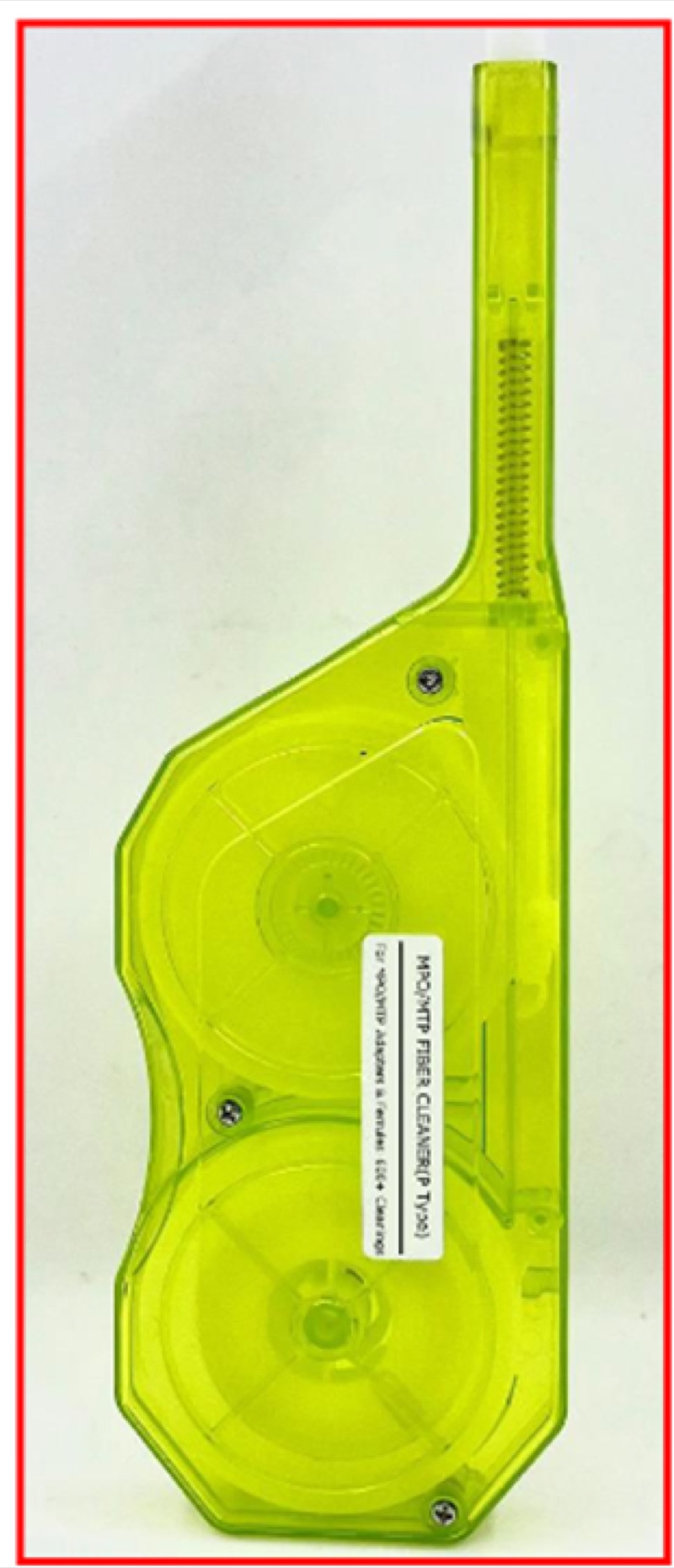
MPO Cleaning
MPO endfaces accumulate contamination quickly because they cover 12 or 24 fibers per connector. Clean before every mating.
Endface Inspection
Inspect every endface before mating. IEC 61300-3-35 compliance.
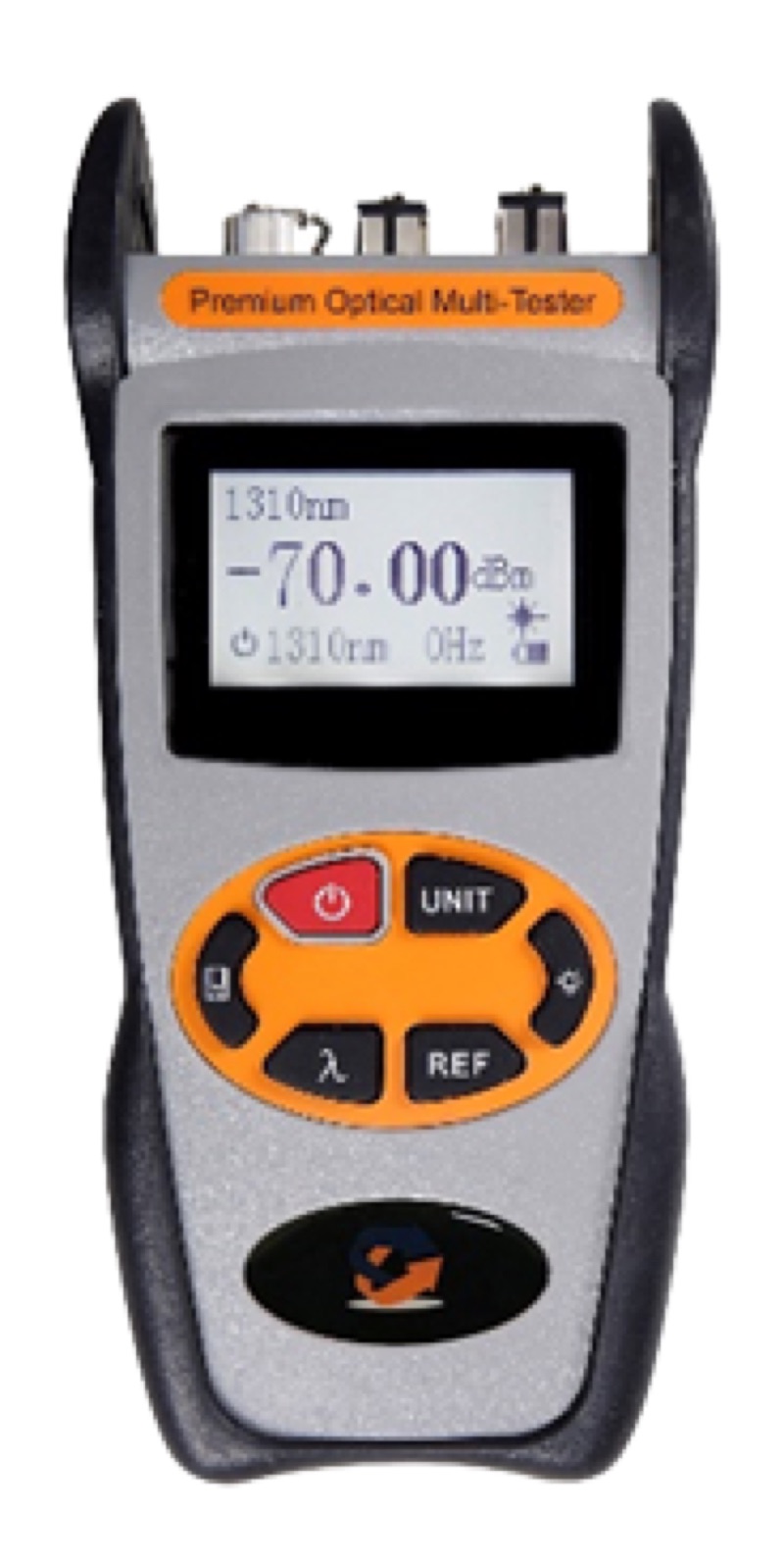
OTDR for Channel Test
Measure individual event loss to confirm cassette and trunk performance against budget.
Use: Fiber Ranger OTDR
The Bottom Line
Cassettes give you flexibility. Direct trunks give you loss margin. For mixed-equipment environments dominated by LC duplex transceivers, cassettes remain the right default. For dedicated 100G/400G short-reach links with parallel-optic transceivers, direct trunk architecture saves loss and density. The MPO trunk itself supports both, so the architectural decision can be made (and changed) independently at each end of the trunk.
For more on MPO trunk specification, see our MPO/MTP trunk cable in the data center guide. For polarity considerations in either architecture, see MPO polarity methods A, B, and C explained. For application-specific loss budgets, see 40G vs 100G vs 400G Ethernet fiber requirements.