The Quick Answer
40G Ethernet Fiber Variants
40 Gigabit Ethernet was the first Ethernet rate to widely adopt parallel optics with MPO. The variants you will encounter:
40GBASE-SR4
Multimode, 850 nm, 4 parallel transmit fibers and 4 parallel receive fibers (8 fibers total over a 12-fiber MPO with 4 unused). Range: 100 m on OM3, 150 m on OM4. Maximum channel loss: 1.9 dB. The dominant 40G variant in enterprise data centers.
40GBASE-LR4
Single-mode, 1310 nm CWDM (4 wavelengths over a single duplex fiber pair). Range: 10 km. Maximum channel loss: 6.7 dB. Used for inter-building backbone and longer single-mode runs.
40GBASE-ER4
Single-mode, 1310 nm CWDM with extended reach. Range: 40 km. Used in metro and campus backbone applications.
40G is increasingly displaced by 100G as the latter has reached price parity. New deployments rarely choose 40G; existing 40G infrastructure is typically upgraded to 100G when refresh cycles allow.
100G Ethernet Fiber Variants
100G has the most variants of any Ethernet rate. Each one targets a different distance, fiber count, and cost point.
100GBASE-SR4
Multimode, 850 nm, 4 transmit and 4 receive parallel fibers (8 total). Range: 70 m on OM3, 100 m on OM4. Maximum channel loss: 1.9 dB. The standard short-reach 100G variant for in-data-hall connections.
100GBASE-SR2
Multimode, 850 nm, 2 transmit and 2 receive parallel fibers (4 total). Newer variant using PAM4 modulation to halve the fiber count. Range: 70 m on OM4. Useful for upgrading existing 4-fiber MPO infrastructure to 100G.
100GBASE-DR1
Single-mode, 1310 nm, 1 transmit and 1 receive duplex fiber pair using PAM4. Range: 500 m. The cost leader for single-mode 100G in the data center because it eliminates WDM optics.
100GBASE-FR1
Single-mode, 1310 nm duplex pair, extended-reach version of DR1. Range: 2 km. Used for inter-building or campus backbone.
100GBASE-LR4
Single-mode, 1310 nm CWDM (4 wavelengths over duplex pair). Range: 10 km. Maximum channel loss: 6.3 dB. The traditional long-reach 100G variant; being displaced by DR1/FR1 inside the data center.
100GBASE-ER4
Single-mode, 1310 nm CWDM, extended reach. Range: 40 km. Metro and longer campus backbone.
400G Ethernet Fiber Variants
400G is where the transceiver and fiber landscape gets interesting. The IEEE 802.3bs (2017) and subsequent amendments define a wide range of 400G variants.
400GBASE-SR8
Multimode, 850 nm, 8 transmit and 8 receive parallel fibers (16 total). Range: 100 m on OM4. Maximum channel loss: 1.9 dB. Requires a 24-fiber MPO connector. The short-reach multimode variant.
400GBASE-SR4.2
Multimode, BiDi (bidirectional) over OM4 or OM5, 4 fiber pairs. Allows 400G over an 8-fiber MPO infrastructure originally deployed for 100GBASE-SR4. Range: 100 m on OM5, 70 m on OM4.
400GBASE-DR4
Single-mode, 1310 nm, 4 transmit and 4 receive parallel fibers (8 total) using PAM4. Range: 500 m. Maximum channel loss: 3.0 dB. The dominant single-mode 400G variant in modern data centers. Native fan-out to 4x100GBASE-DR1.
400GBASE-FR4
Single-mode, 1310 nm CWDM (4 wavelengths over duplex pair) using PAM4. Range: 2 km. Inter-building data center campus.
400GBASE-LR4
Single-mode, 1310 nm CWDM, extended reach. Range: 10 km.
Side-by-Side Comparison
| Variant | Fiber | Fiber Count | Connector | Distance | Max Loss |
|---|---|---|---|---|---|
| 40GBASE-SR4 | OM3/OM4 | 8 | MPO-12 | 100/150 m | 1.9 dB |
| 40GBASE-LR4 | OS2 | 2 | LC duplex | 10 km | 6.7 dB |
| 100GBASE-SR4 | OM4 | 8 | MPO-12 | 100 m | 1.9 dB |
| 100GBASE-DR1 | OS2 | 2 | LC duplex | 500 m | 3.0 dB |
| 100GBASE-LR4 | OS2 | 2 | LC duplex | 10 km | 6.3 dB |
| 400GBASE-SR8 | OM4 | 16 | MPO-24 | 100 m | 1.9 dB |
| 400GBASE-DR4 | OS2 | 8 | MPO-12 | 500 m | 3.0 dB |
| 400GBASE-FR4 | OS2 | 2 | LC duplex | 2 km | 4.0 dB |
| 400GBASE-LR4 | OS2 | 2 | LC duplex | 10 km | 6.3 dB |
Migration Planning: From 10G to 400G and Beyond
Cable plant lifetimes are 15 to 25 years; transceiver lifetimes are 3 to 5 years. The cable plant decisions you make today will be in service across multiple transceiver generations. A few principles save grief later:
- Provision MPO infrastructure even if your day-one transceivers are LC duplex. An MPO trunk with cassettes can present LC duplex today and MPO direct tomorrow. The reverse is not true.
- Pick OM4 minimum for new multimode. OM3 limits you to shorter reach at 100G and 400G. OM5 adds wideband support but costs more; OM4 is the practical default.
- Prefer OS2 single-mode for backbone. Single-mode supports any rate at any distance the data center will reasonably see. The fiber cost difference vs OM4 is small at trunk scale.
- Deploy 24-fiber MPO for high-density runs. 24-fiber natively supports 400GBASE-SR8 and gives 12 LC duplex pairs at fan-out, doubling cassette density vs 12-fiber MPO.
- Document loss budgets per channel. A channel that passed 10G certification may not pass 100G or 400G. Recertify before assuming compatibility.
Key Cabling Components
Single-Mode LC Duplex Patch
For 100GBASE-DR1, FR1, LR4, ER4 and 400GBASE-FR4, LR4 transceiver patching.
Multimode OM4 Jumper
For 40GBASE-SR4, 100GBASE-SR4 patching at the transceiver in pairs.
SM APC for PON/Long Reach
For single-mode applications requiring low back-reflection.
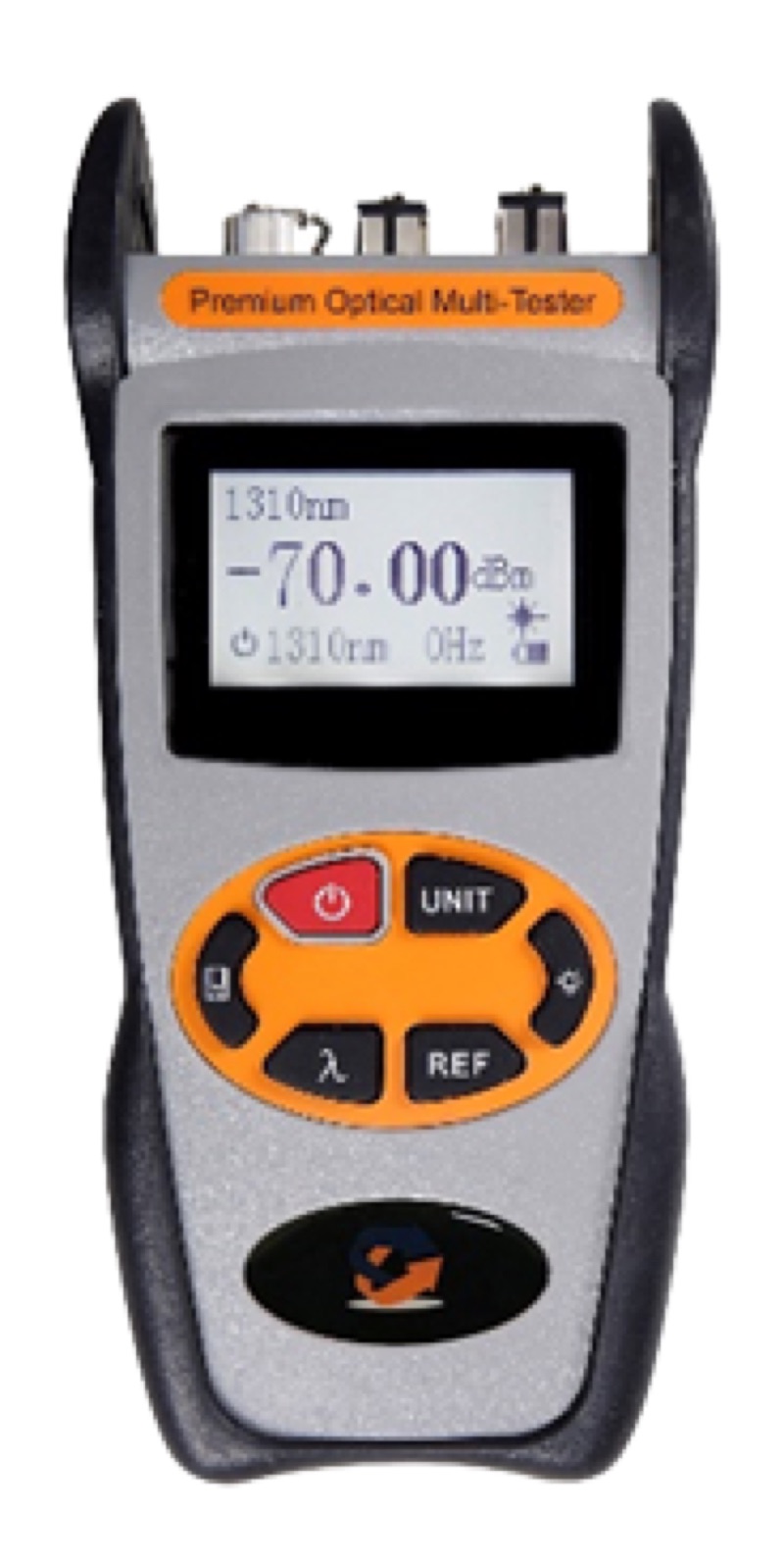
Certification Test Set
Tier 1 OLTS power meter and Tier 2 OTDR for 100G/400G acceptance testing.
The Bottom Line
40G, 100G, and 400G all coexist in modern data centers. The fiber strands themselves can support all three rates if the loss budget is managed and the connector population is right. The architectural decisions worth making today: deploy OM4 minimum and OS2 backbone, use 24-fiber MPO for high-density runs, and certify every channel against the highest IEEE rate you intend to run on it. The MPO infrastructure deployed for 100G today serves 400G tomorrow and 800G after that.
For details on the certification procedure, see data center fiber cable certification requirements. For polarity in MPO links, see MPO polarity methods A, B, and C explained. For the structured cabling architecture overall, see structured fiber cabling for data centers.